TL;DR: Galápagos coral skeletons show eastern Pacific El Niño events of the past 40 years were stronger than any in the prior 1,000 years, and the rise tracks warming global temperature.
A study published August 27, 2026, in the journal Science reports that recent El Niño events are the most intense in a millennium. According to Science, geochemistry from Galápagos corals reveals a large recent rise in year-to-year sea-surface temperature variability in the eastern equatorial Pacific that exceeds simulated natural variability, parallels rising global temperature, and stems from stronger El Niños.
The work addresses a long-running question about the El Niño–Southern Oscillation, or ENSO. According to New Scientist, detailed instrumental records extend only to the 1980s, too short to separate a warming-driven trend from normal decade-to-decade swings. The new coral reconstruction extends coverage across much of the last 1,000 years and places the last four decades outside the earlier range, according to the University of Arizona News account of the study.
What the 1,000-year comparison found
The central result is comparative: El Niño strength in the last 40 years exceeds strength at any point in the 1,000 years before about 1850, the period before humans began altering climate with greenhouse gases. That framing appears in reporting from the University of Arizona News and the University of Michigan release carried by EurekAlert!.
In percentage terms, the increase is large. According to the University of Arizona News, El Niño events became nearly 40% stronger over the last 40 years than during the pre-industrial era. According to New Scientist, variability in the ENSO cycle increased by 36.5% over the past 40 years compared with the pre-industrial period, driven largely by more intense El Niño events.
Lead author Julia Cole, professor and chair of the Department of Earth and Environmental Sciences at the University of Michigan, said the team sees no earlier interval with El Niños as strong as today and finds that El Niño strength changes in parallel with warming global temperature. According to the University of Arizona News, Cole said the large El Niño events of the last 40 years are not normal in the context of the last thousand years.
Co-author Samantha Stevenson, an assistant professor at UC Santa Barbara’s Bren School of Environmental Science & Management, said the new reconstructions reach farther back in the eastern Pacific than previously possible and show El Niño gaining strength, with change accelerating over the past few hundred years, according to UC Santa Barbara’s The Current.
Why Galápagos corals record El Niño
The Galápagos sit near the center of eastern Pacific El Niño development. According to the University of Arizona News, co-author Diane Thompson described the location as right in the center of action for understanding Pacific change. Thompson is an associate professor in the Department of Geosciences and director of marine research at the University of Arizona’s Biosphere 2.
Corals build calcium-carbonate skeletons at one to two centimeters per year, and skeleton chemistry preserves seawater temperature during growth. That growth-rate and archive description is given in the University of Michigan release. Because El Niño extremes recur every few years, the team used core samples spanning at least 20 years, according to the same release.
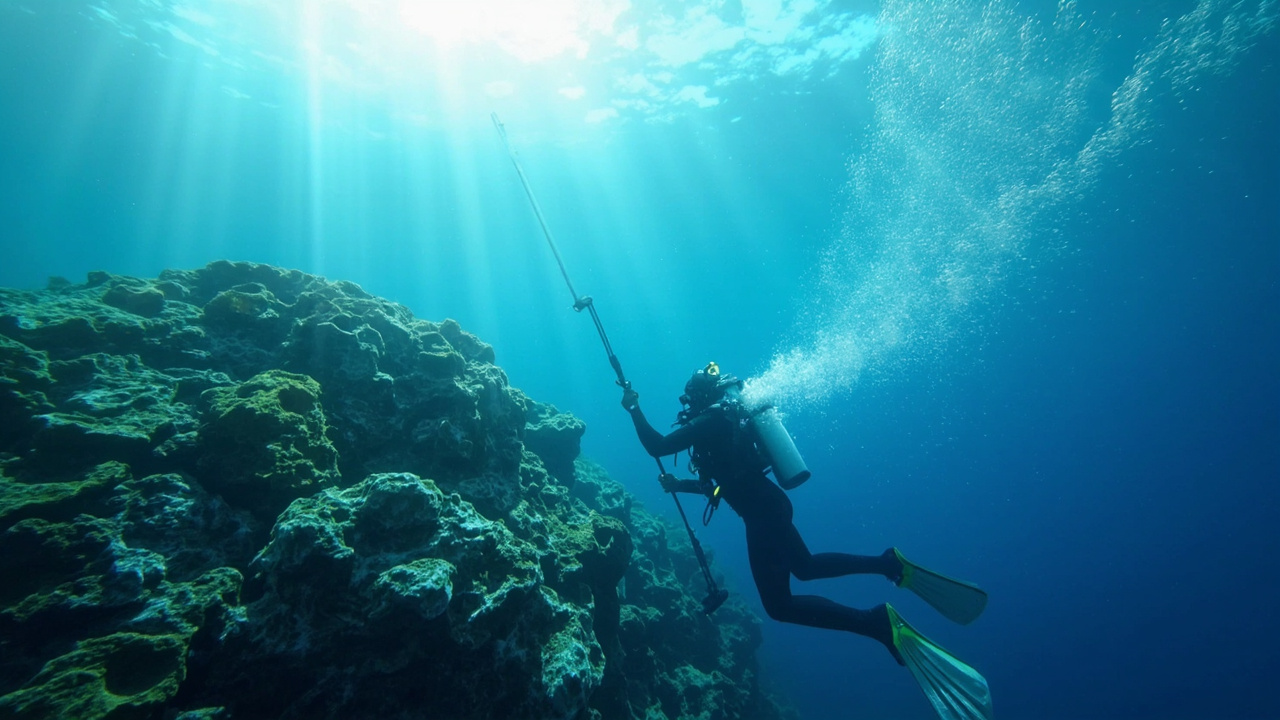
The researchers sampled 13 corals, including living colonies and boulders of ancient coral, according to the University of Arizona News and EurekAlert!. Fieldwork included living corals underwater and ancient coral boulders on land, with sampling photographs crediting work by Diane Thompson and colleagues alongside Andrea Lema formerly of the Charles Darwin Research Station.
Living colonies sampled in the northern islands of Wolf and Darwin grow in water 20 to 50 feet deep and can stand 8 to 10 feet tall, according to The Conversation article written by Cole. Divers drilled cores from those colonies, while other samples came from fossil material that extends the timeline backward.
In the laboratory, the team sampled cores millimeter by millimeter. According to the University of Arizona News, researchers measured the ratio of strontium to calcium, which depends on seawater temperature, and supplemented that measurement with the ratio of oxygen isotopes, also a temperature proxy at the site. According to The Conversation, the two chemical parameters were the ratio of heavy to light oxygen isotopes and the ratio of strontium to calcium.
Ages for older material came from uranium and thorium dating, according to New Scientist. That dating allowed construction of a sea-surface temperature time series spanning the past 1,000 years. The collected corals covered about half of that 1,000-year interval, according to New Scientist, yet the authors reported a clear overall trend.
How researchers tested natural variability
El Niño naturally varies, with more active and less active decades. According to the University of Arizona News, Thompson said century-scale records will show decades of stronger and weaker behavior as part of normal variation. The challenge was determining whether the recent усиление could arise without external warming.
To test that, Thompson and Marcus Lofverstrom, associate professor in the University of Arizona Department of Geosciences, compiled and analyzed climate-model simulations, according to the University of Arizona News. The simulations represented the last thousand years using histories of volcanic eruptions and solar variability and allowed comparison of inherent variability with forcings such as volcanic activity, changes in orbital configuration between sun and Earth, and fossil-fuel-driven atmospheric warming.
According to Science, the coral-inferred recent increase exceeds simulated natural variability. According to EurekAlert!, models using volcanic and solar histories found no large shifts suggesting natural processes alone could create such large changes. The authors therefore linked intensification to rising temperature rather than internal swings alone.
Cole said the increase in ENSO variability is tracking global temperature closely, according to New Scientist. Mark Cane of Columbia University, whose own work used tree-ring data to identify increased recent El Niño activity, said the evidence is better than 50-50 that climate change is affecting El Niño, according to New Scientist.
Central Pacific coral data also show increased variability, although less distinctly than in the Galápagos, according to the abstract published by Science. That geographic contrast matters because eastern and central Pacific event types can differ in expression and effects.
What El Niño does to weather and oceans
El Niño is a recurring natural phenomenon that makes the tropical Pacific warmer than usual every few years. According to the University of Arizona News, trade winds normally blow east to west along the equator, pushing warm water from South America toward Australia. When those winds weaken, warm water spreads eastward toward South America, initiating an El Niño.
The atmosphere responds. According to the same account, heavy rainfall shifts from Indonesia into the central Pacific, leaving the western Pacific in drought. That shift weakens trade winds further and can lock conditions in place for one to two years. Although temperature and precipitation changes begin in the tropical Pacific, effects reach worldwide.
In the United States, storm tracks move southward, bringing more rain to the desert Southwest and less to the Northwest, according to the University of Arizona News. Around the world, similar shifts produce drought and flooding associated with disease, crop failure, wildfires and other threats to health and well-being.
The Galápagos illustrate ocean-ecosystem consequences. According to The Conversation, exceptionally warm surface water during the strong 1982 event blocked upwelling of cool, nutrient-rich water that supports phytoplankton, fish, birds, marine mammals and fishing livelihoods across the eastern tropical Pacific. In that heat, more than 95% of Galápagos corals died.
Economic and human costs from past extremes were severe. According to The Conversation, the 1982-83 El Niño contributed to flooding in Kenya and Peru and drought in Indonesia and Brazil, with global economic costs estimated as high as US$4 trillion under some estimates. A similarly strong 1997-98 event resulted in 23,000 deaths from disease and climate disasters.
Why the 2026 El Niño drew attention
The study appeared while another El Niño was developing. According to The Conversation, temperatures warmed dramatically across the equatorial Pacific in 2026, signaling onset of a strong and potentially historic El Niño. According to UC Santa Barbara’s The Current, sea-surface temperatures in the tropical Pacific were already far higher than average by the first week of June 2026.
Local effects were reported off California. According to The Current, water off Santa Barbara reached the low 70s Fahrenheit in late August, and anglers reported catching dorado and yellowtail around the Channel Islands. The article described the 2026 episode as an El Niño of historic proportion taking shape in the tropical Pacific.
Cole distinguished occurrence from severity. According to the University of Arizona News, she said the question is not whether the current El Niño will happen, but how severe it will become and how severe its impacts will be. She said the event is superimposed on global warming and is likely to supercharge the temperature increase normally associated with greenhouse gases.
Some forecasts discussed at the time suggested global temperature might reach 1.7 or 1.8 degrees Celsius above pre-industrial levels, substantially above the then-current record, according to the University of Arizona News. The study itself did not include the 2015, 2023 and 2026 El Niños, but Cole said they are consistent with the coral-identified trend, according to New Scientist.
When the current El Niño peaks near the end of the year, sea-surface temperatures in the east-central Pacific were projected to reach 4 degrees Celsius above normal, a 60% increase over the old record, according to New Scientist. Michael McPhaden of the U.S. National Oceanic and Atmospheric Administration said three major El Niños in the past decade would be unprecedented in the instrumental record dating to the late 19th century and would add to evidence that climate change is amplifying the ENSO cycle.
What the findings imply for future extremes
The authors present the 1982-83 and 1997-98 El Niños as possible harbingers of more extreme events as the planet warms, according to The Conversation. That language describes a risk suggested by the records, not a prediction for a specific year.
Support for the research came from the U.S. National Science Foundation and the United Kingdom Natural Environment Research Council, according to EurekAlert!. The paper appeared in Science on August 27, 2026, as volume 394, issue 6820, pages 192 through 196, with digital identifier 10.1126/science.ady2660.
An editor’s summary in Science states that anthropogenic warming is dramatically increasing interannual sea-surface temperature variability in the eastern equatorial Pacific and that the documented trend toward stronger El Niños has produced multiple extreme events over recent decades. The summary also warns of serious implications for ecosystems, infrastructure and human welfare worldwide.
Sources referenced
- Recent strengthening of eastern Pacific ENSO in the last millennium paleorecord | Science (https://www.science.org/doi/10.1126/science.ady2660)
- El Niño grew more intense over the last 40 years than the previous 1,000 | University of Arizona News (https://news.arizona.edu/news/el-nino-grew-more-intense-over-last-40-years-previous-1000)