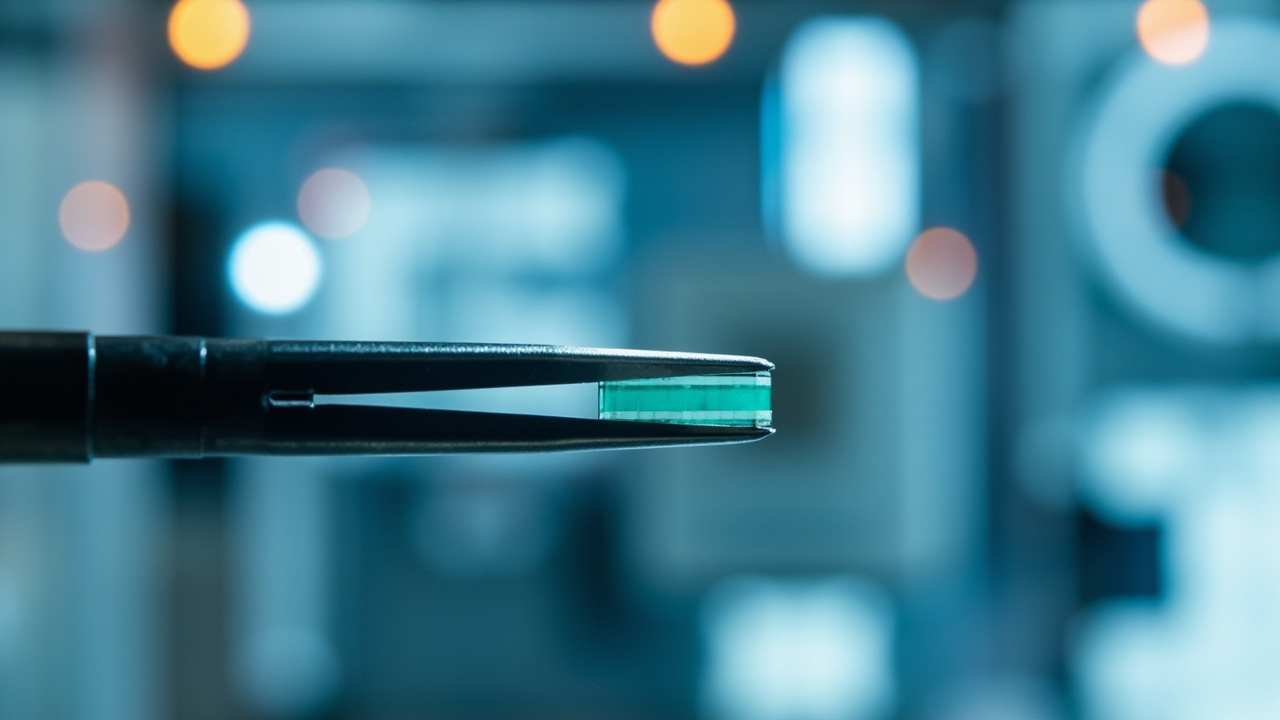
TL;DR: Panasonic Energy said on Sept. 9 that it developed a solid-state battery able to operate at up to 150 degrees Celsius and will start sample shipments in October–December 2026.
Panasonic Energy has completed development of a heat-tolerant solid-state battery and set a near-term date to put test units in customers' hands. The battery unit of Panasonic Holdings said its new small industrial cells can run in environments up to 150 degrees Celsius, or 302 degrees Fahrenheit, lifting the ceiling from 125 degrees Celsius, according to Reuters.
The disclosure came on Sept. 9 in Chiba, Japan, from Chief Technology Officer Shoichiro Watanabe. Watanabe spoke after an address at an industry battery conference and exhibition, and then briefed reporters on specifications, cell shapes and commercial plans, according to Channel News Asia.
The company framed the device as an industrial component rather than an electric-vehicle power source. Initial customers are expected in factory equipment and vehicle sensing, with sample shipments scheduled for the October-to-December quarter and volume manufacturing projected one to two years later, according to Channel News Asia.
What Panasonic Energy announced in Chiba
Watanabe said Panasonic Energy developed solid-state cells that remain operable at a maximum of 150 degrees Celsius. The temperature figure applies to small industrial cells in both coin-shaped and newly developed prismatic formats, with shipments of test quantities planned for October–December, according to Reuters reporting in Japanese.
The venue was a battery exhibition at Makuhari Messe in the city of Chiba. Watanabe described the work during a speech and a joint interview afterward, placing the announcement in the context of factory controls, automotive sensing and other high-temperature operating environments, according to that Japanese-language Reuters report.
Panasonic Energy is the battery business company within Panasonic Holdings. The company said it is pursuing social implementation first through sensors for industrial machinery and vehicles, rather than through traction batteries for electric vehicles, according to the same report.
The schedule distinguishes completed development from future commercial steps. Development of the 150-degree-capable coin and prismatic industrial cells was presented as completed, while sample delivery in the October–December period and mass production one to two years after samples were presented as plans, according to Channel News Asia.
From 125 C to 150 C: why 25 degrees matters
The increase from 125 degrees Celsius to 150 degrees Celsius expands where a battery can sit inside hot equipment. Watanabe said usability grows as tolerated temperature rises, and reaching 150 degrees could support sterilization processes for medical instruments, according to the Japanese-language Reuters report.
That account linked prior uses to tire-pressure sensors and sensors for industrial robots. Higher tolerance was portrayed as a way to add customers operating in hotter conditions, rather than as an incremental laboratory record, according to the same report.
The English-language report similarly said greater heat resistance could broaden potential applications to areas such as sterilization of medical equipment, according to Channel News Asia.
The technical contrast rests on electrolyte design. Solid-state batteries use a solid electrolyte instead of the liquid electrolyte found in lithium-ion batteries, a difference associated with better safety and heat resistance, although establishing mass-production methods remains a challenge being pursued across the industry, according to Nikkei.
New prismatic cell joins coin-shaped line
Panasonic Energy previously offered only a coin-shaped form for this class of solid-state cell. It has now added a small-size prismatic, or rectangular, design alongside the coin shape, according to the Japanese-language Reuters report.
Watanabe said the prismatic shape makes layout easier than the coin shape, a practical point for equipment makers fitting power sources around sensors, wiring and housings, according to Channel News Asia.
The Japanese-language account quoted the same comparison, saying arrangement becomes easier with the rectangular format and could help increase the customer base, according to that Reuters report.
Nikkei described the devices as small products with a diameter of about one centimeter and said coin and prismatic types would be supplied. It listed factory-equipment control units and vehicle sensors operating in high-temperature settings among the anticipated uses, according to Nikkei.
Why industrial machines come before electric vehicles
Panasonic Energy said its first target is not electric vehicles. The company named industrial machinery and vehicle sensors as the entry markets, deferring automotive traction use, according to Channel News Asia.
That sequencing reflects temperature and size requirements in factories and vehicles. Sensors mounted near heat sources, inside production machinery or around automotive systems can face conditions that limit conventional battery choices, and a compact high-temperature cell is intended to operate in those niches, according to Nikkei.
The company said applications could extend to medical-equipment sterilization if operation at 150 degrees proves useful to customers, an example Watanabe cited when explaining why a higher ceiling creates additional usability, according to the Japanese-language Reuters report.
The strategy does not rule out larger or vehicle-propulsion batteries later, but the Sept. 9 statements defined the near-term commercial path as industrial and sensing uses, with evaluation by equipment makers preceding any volume ramp, according to Channel News Asia.
Sample shipments and mass-production timetable
Sample shipments are scheduled for October–December 2026. Watanabe gave that quarter as the start for deliveries of the small industrial cells, according to Channel News Asia and Nikkei.
Mass production is planned for one to two years after sample shipments begin. The company presented that interval as its target for moving from customer evaluation to volume manufacturing, according to Channel News Asia.
The Japanese-language Reuters account gave the same sequence, describing a plan to aim for commercial-scale production one to two years after the start of test shipments, according to that report.
Nikkei separately reported that the cells demonstrated an average of 100 hours of durability performance in a 150-degree high-temperature environment. It presented sample shipments as imminent and described business development initially centered on industrial machinery, according to Nikkei.
Cylindrical batteries eyed for humanoid robots
Alongside solid-state work, Watanabe said Panasonic Energy will accelerate development of cylindrical batteries for humanoid, or human-like, robots, according to the Japanese-language Reuters report.
He prefaced the remarks by saying no business has been decided at this point. Within that qualification, he said cylindrical cells have high affinity for humanoid uses because robots need batteries that can be mounted in limited space and fit easily into rounded shapes, according to the same report.
Channel News Asia gave a similar account, saying cylindrical batteries are well suited to humanoid robots because they fit into limited spaces and rounded structures, according to Channel News Asia.
Nikkei added performance criteria for that prospective market, quoting Watanabe as describing high energy density, safety and light weight as requirements in the humanoid field. The report quoted him saying no specific business has been decided, but that the company wants to assess battery-enabled solutions carefully, according to Nikkei.
Competitive landscape for high-heat solid-state cells
Panasonic Energy is entering a field where rivals are already shipping high-heat-tolerant small solid-state cells. Maxell moved ahead in commercialization, starting full-scale shipments in the second half of fiscal 2024 and seeking wider adoption for industrial robots and infrastructure monitoring, according to Nikkei.
Maxell markets comparable 150-degree-class heat resistance, according to Nikkei. Its reported uses include sensor equipment mounted on industrial robots and backup power for monitoring equipment that checks for abnormalities, according to Nikkei.
Larger automotive demand is being pursued on a longer timeline. Toyota Motor and Nissan Motor are concentrating development for vehicle applications, with Toyota planning market introduction around 2027–2028 and Nissan considering mass production in fiscal 2028, while Japan's Ministry of Economy, Trade and Industry points to full-scale practical use around 2030, according to Nikkei.
Watanabe also addressed wider battery demand beyond solid-state cells. Pointing to rapid growth in storage-battery demand for data centers amid wider use of artificial intelligence, he said rising computing capability brings higher power consumption and requires continued improvement in battery performance, adding that the company develops with two steps ahead in view, according to Nikkei.
Sources referenced
- Panasonic Energy develops solid-state battery that can operate at 150 degrees Celsius - CNA (https://www.channelnewsasia.com/business/panasonic-energy-develops-solid-state-battery-can-operate-150-degrees-celsius-6372861)
- Reuters: Panasonic Energy develops solid-state battery that can operate at 150 degrees Celsius (https://www.reuters.com/business/energy/panasonic-energy-develops-solid-state-battery-that-can-operate-150-degrees-2026-09-09/)