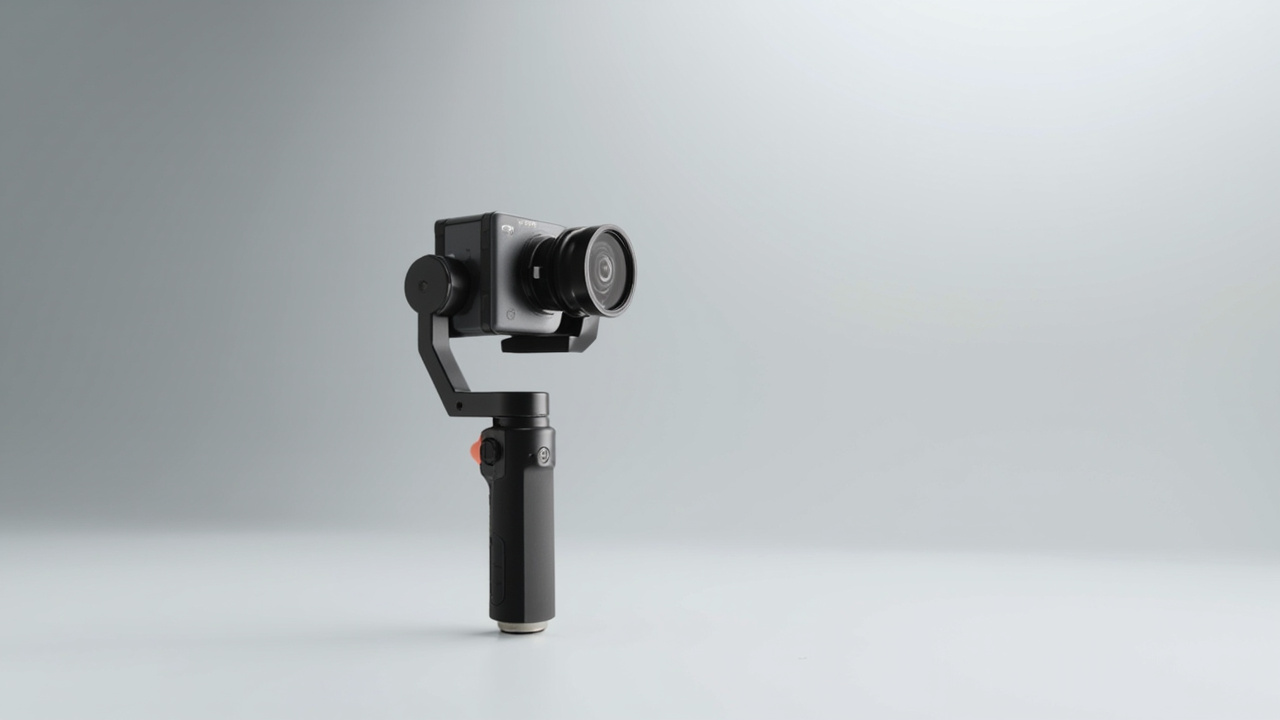
TL;DR: Insta360's $599.99 Luna Pro is a single-lens pocket gimbal with a 1-inch 8K sensor and native 4K vertical video that is on sale in the United States.
A Pocket Gimbal Built Around One Camera
Insta360 introduced the Luna Pro as a single-lens compact steadycam, according to The Verge. The announcement was reported on Sept. 11, 2026, by news editor Dominic Preston, who said he saw the device briefly at the IFA trade show.
The Pro follows the Luna Ultra, Insta360's first compact steadycam, according to The Verge. The Ultra arrived with two lenses, while the Pro reduces the system to one lens. The change makes the Pro slightly smaller and lighter than the Ultra, according to The Verge.
Engadget published its review on Sept. 10, 2026, by James Trew, giving the Luna Pro a score of 9.3 out of 10. The review listed detachable screen and remote use, native 4K portrait mode, digital zoom and still photos as strengths, with price and a slow-motion ceiling of 120 fps as drawbacks.
That launch came during a crowded period for pocket cameras, according to Engadget. DJI started the summer with the Pocket 4, Insta360 followed with the dual-lens Luna Ultra, DJI answered with the Pocket 4P, and GoPro delivered the Mission 1 Pro, alongside rugged 360 cameras from DJI and Insta360.
Price And Where It Is Sold
The Luna Pro is out now in the United States for $599.99, according to The Verge. The Luna Ultra is priced at $769.99 in the U.S., making the Pro $170 less expensive.
In Europe, the Pro starts at £469 or €529, according to The Verge. That compares with £429 or €479 for the DJI Osmo Pocket 4 in Europe.
Daily Camera News reported a $599 retail price and Sept. 10, 2026 availability. Joe's Daily, in reporting dated Sept. 10, 2026, said Insta360 put the Luna Pro on sale worldwide, including in the U.S., at $599.99 through the Insta360 Store, Amazon and select retailers.
Joe's Daily said the Standard Bundle is sold at $599.99 in Cosmic Black and Stellar White. The $170 difference from the $769.99 Luna Ultra represents about 22 percent off the Ultra price, according to Joe's Daily.
One Lens Instead Of Two
The Pro keeps the Ultra's main camera and removes the telephoto module, according to The Verge and Joe's Daily. It uses the same 1-inch-type 8K sensor as the Ultra's main camera, according to The Verge.
Engadget said the Pro matches the Luna Ultra's main 20mm camera internally. The single-lens system is described as a 20mm fixed-focal-length gimbal camera, according to Engadget.
The lens is identified as a Leica Summicron 20mm-equivalent f/1.8 lens, according to Engadget, Daily Camera News and Joe's Daily. Insta360 describes the model as co-engineered with Leica, according to Daily Camera News and Joe's Daily.
Engadget said the 1-inch sensor supports 8K/30 and 4K/120. Daily Camera News reported 8K Dolby Vision HDR video at 30fps and 4K/120fps slow motion, plus 1080p at 240fps noted by Joe's Daily and GSMArena reporting of up to 1080p 240fps slow-motion footage.
For still images, the camera captures up to 37-megapixel photos, according to Engadget and Daily Camera News. Video features include Dolby Vision, 10-bit I-Log and ACES workflow support, according to Engadget and Daily Camera News.
Why 4K Vertical Video Matters
The main functional difference is 4K vertical recording at 30fps, according to The Verge. The Pro can use its 8K sensor to record 4K vertical video at 30fps.
The Luna Ultra, DJI Osmo Pocket 4 and DJI Osmo Pocket 4P are limited to 3K resolution in portrait recording, according to The Verge. Engadget similarly said the Luna Ultra, Pocket 4 and 4P offer 3K in portrait mode.
That limitation forced some users to hold the whole gimbal sideways for higher-resolution vertical footage, according to The Verge. Engadget said holding the Luna Pro at 90 degrees preserves available features but removes one axis of gimbal stabilization and feels less natural.
Insta360 told The Verge that 4K vertical video will also be added to the Luna Ultra through a firmware update, currently expected Sept. 20. The Verge added that confirmation in a Sept. 11 update.
Technical details vary by orientation, according to Engadget. On the Pro, 4K portrait tops out at 30fps, while landscape recording reaches 120fps. Dropping to 3K allows up to 60fps, according to Engadget.
Daily Camera News described native 4K vertical video with 6K oversampling. Joe's Daily said the Luna Pro oversamples from 6K and changes orientation when the touchscreen is rotated, recording a vertical frame for Reels, TikTok and Shorts rather than relying on a cropped horizontal image.
Screen, Battery And Body Design
From the neck down, the Luna Pro is almost identical to the Ultra, according to Engadget. The visible difference is a wider frame along the top edge of the display with the word Luna printed in cursive.
Above that section, the single-lens gimbal head is smaller and reduces total height by about half an inch, according to Engadget. The Pro includes the same pop-off front panel that functions as a wireless remote and microphone, according to Engadget.
The detachable 2-inch touchscreen doubles as a remote, according to The Verge. Engadget described it as a detachable 2-inch OLED touchscreen, while Daily Camera News also listed a detachable 2-inch OLED touchscreen with remote monitoring and control.
Battery life is rated at four hours, according to The Verge. Engadget identified a 1,550 mAh battery shared with the Ultra, while Daily Camera News reported up to four hours with fast charging. Joe's Daily advised treating four hours as a best-case figure until tested while shooting 4K.
Faster phone connection uses an NFC tag for opening the Insta360 smartphone app and transferring files, according to The Verge and Joe's Daily. The Verge said the NFC tag moved into the camera head.
Engadget said the near-identical body means accessories are largely compatible except items attached to the gimbal head. A fill-light accessory supplied for review connects to the collar of the gimbal mechanism and is not compatible with the Luna Ultra, according to Engadget.
The detachable displays can be swapped between Pro and Ultra models and still work wirelessly, according to Engadget. In testing, the screen updated its firmware to match the new camera, which removed the 4K portrait menu option on the Pro until a factory reset, according to Engadget.
Storage, Zoom And Creator Tools
Internal storage is 47GB, expandable with an SD card, according to Engadget. Daily Camera News reported 47GB of built-in storage plus microSD support up to 2TB.
That compares with 107GB of internal storage in the Pocket 4, according to Joe's Daily. The Pocket 3 has no internal storage, with all footage stored on microSD, according to Joe's Daily.
For zoom, Insta360 claims HiRes 4x zoom despite the single lens, according to Engadget. At 2x, the image remains within the 8K sensor's native image, with software enhancement beyond that point, according to Engadget. Daily Camera News listed 2x lossless zoom and 4x HighRes Zoom with AI detail enhancement.
Stabilization is provided by a 3-axis system, according to Daily Camera News and Joe's Daily. Subject tracking is handled by AI-powered Deep Track, covering single-person, multi-person and pet tracking, according to Daily Camera News. Rapid Focus is included to keep subjects sharp, according to Daily Camera News.
Audio and production accessories include compatibility with the Insta360 Mic Series and POV Head Tracker, according to Daily Camera News. The Pro records 10-bit I-Log with ACES support, includes built-in timecode for multi-camera syncing, and names Final Cut Pro and Premiere Pro as supported editors, according to Joe's Daily.
Color options include Leica Natural, Vivid and Chrome profiles, according to Daily Camera News and Joe's Daily. Built-in cinematic filters are also included, according to Daily Camera News. PureVideo AI mode enhances low-light performance up to 4K60, according to Daily Camera News.
Reported weight is 215g in black and 218g in white, according to Daily Camera News. The model is powered by a 4nm chipset with a dedicated image processor, according to GSMArena.
U.S. Availability Compared With DJI
A central distinction is U.S. retail availability, according to The Verge. Unlike DJI's Osmo Pocket 4, the Luna Pro can be bought in the U.S.
The Osmo Pocket 4 is officially unavailable in the U.S. following a ban on the company, according to The Verge. Joe's Daily said DJI has not released the Pocket 4 in the U.S. through official channels, citing pending authorization, so U.S. units come from third-party importers.
Those third-party Pocket 4 listings recently ran close to $690 without DJI U.S. warranty or support, according to Joe's Daily. At $599.99, the Luna Pro is about $90 cheaper than those listings and includes a manufacturer warranty, according to Joe's Daily.
DJI's global starting price for the Pocket 4 is $499, according to Joe's Daily. The Pocket 3 remains on sale at roughly $500 to $590 depending on retailer, according to Joe's Daily.
Against the Pocket 3, the Luna Pro adds 8K recording, a detachable screen and 47GB of built-in storage for about $100 over Pocket 3 street pricing, according to Joe's Daily. Against the Pocket 4, DJI offers more internal storage and 4K recording at up to 240fps, compared with 120fps on the Luna Pro, according to Joe's Daily.
Early Image-Quality Findings
Engadget said the Pro reliably delivers a crisp, high-quality image. In 4K, colors appeared bright and gently saturated, according to Engadget.
The f/1.8 aperture provided depth and subject separation, according to Engadget. Under the same close-up conditions, the reviewer saw slightly more background blur from the Luna Pro than from the Osmo Pocket 4, while DJI's camera showed richer color depth.
On default settings, Luna Pro detail and blacks looked slightly more punchy than the Pocket 4, according to Engadget. Both cameras offer log recording with color restoration, and the Luna also supports Dolby Vision, according to Engadget.
The reviewer used the Luna Pro as the main B-roll camera for a GoPro review video and tested it across dark and well-lit areas, according to Engadget. Exposure transitions were generally smooth but sometimes abrupt, and bright backgrounds or sunny, overcast skies occasionally overexposed in standard color mode with a wide dynamic range, according to Engadget. Using I-Log generally provided more headroom, according to Engadget.
Photos taken with the Luna Pro were used for Engadget's Mission 1 Pro ILS review. The reviewer said the results were strong enough for publication for a video-first camera, without suggesting it could replace a main stills camera.
Sources referenced
- Insta360 launches a single-lens Osmo Pocket rival you can actually buy in the US | The Verge (https://www.theverge.com/gadgets/993837/insta360-luna-pro-steadicam-gimbal-release-price-specs)
- Insta360 Luna Pro Review: Your Instagram Reels Are About To Get An Upgrade - Engadget (https://www.engadget.com/2253274/insta360-luna-pro-review/)