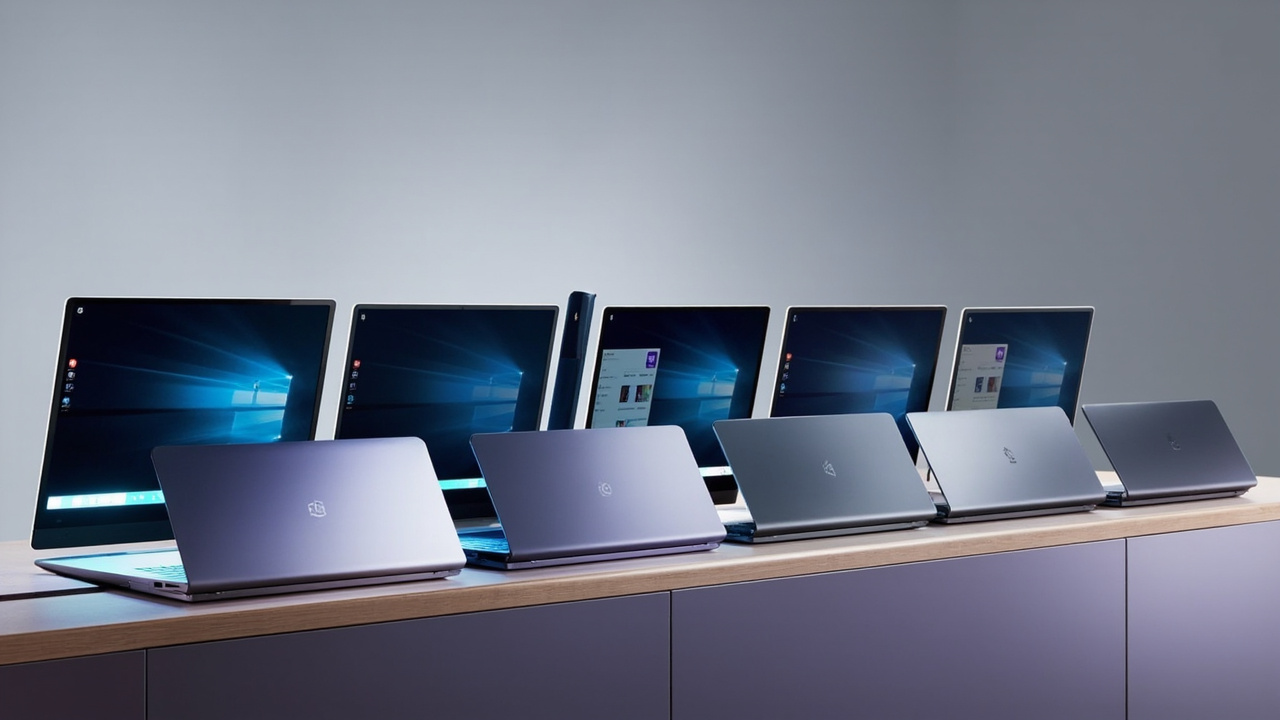
TL;DR: Five Android-powered Googlebooks from Acer, Dell, Lenovo, HP and Asus are available to preorder now starting at $899, with U.S. retail sales planned for October 4.
Google has opened preorders for its first five Android-powered laptops, with prices ranging from $899 to $1,299 and U.S. store availability planned for October 4, according to Ars Technica.
The launch marks Google's latest attempt to build a premium laptop category beyond budget Chromebooks. The company is not manufacturing the hardware itself. Instead, longtime Chromebook partners Acer, Asus, Dell, HP and Lenovo are building and selling the machines, according to Ars Technica. The new systems run a new Android-based operating system rather than ChromeOS, and Google positions them as full computers with premium materials, local apps and developer tools.
Preorders are now open on the Google Store, Best Buy and other select retailers, according to Google. Devices are scheduled to reach shelves on October 4 in the U.S., and on October 5 in Canada, the U.K., Ireland, France, Germany and Australia. That schedule makes the October retail debut a planned future event, not a completed sale, as of the September 21 announcement.
Preorder prices and where to buy
The lineup includes one model under $1,000 and four models above it. The cheapest entry point is $899, while two configurations start at $1,299 at the top of the range.
According to Ars Technica, the starting prices are $899 for the Acer Googlebook 14, $999 for the Dell XPS Googlebook, $1,099 for the Lenovo Googlebook 15, and $1,299 each for the HP Googlebook 14 and Asus Googlebook 14. Google likewise lists the portfolio as five flagship models starting at $899.
Google said preorder customers receive bundled software with every purchase. Each machine includes 12 months of Google AI Pro, which provides 5TB of cloud storage and higher usage limits in Gemini, plus three months of YouTube Premium, Adobe Photoshop and more, according to Google. The company also promises regular feature drops and updates for up to 10 years for Googlebook OS.
Five launch models at a glance
All five launch machines include backlit keyboards, touchscreens and a lid light called Glowbar, according to Google and Ars Technica. All five also include fingerprint scanners, with one model adding face authentication.
The portfolio spans 13.4 inches to 15.3 inches, with most models using OLED touch displays. Four vendors use metal-centric chassis designs, while Lenovo adds carbon fiber to reduce weight on its larger system.
Acer Googlebook 14 starts at $899
The Acer Googlebook 14 is the least expensive model at $899 and the only convertible in the launch group, according to Ars Technica.
It uses Intel Core Ultra 5 or 7 processors from the Panther Lake-based Intel Core Ultra Series 3 family, with 16GB of memory and 256GB or more of storage. The display is a 14-inch 2.8K OLED touch panel rated at 500 nits. The chassis combines aluminum and magnesium, measures 13.9mm thick and weighs 2.7 pounds, or 1.22 kg. Biometric login is through a fingerprint sensor.
Google describes Acer's entry as the convertible that shifts from laptop to tablet use. Ars Technica noted the $100 step from this model to the next-cheapest Dell system, and said prices for some Lenovo and Dell configurations appeared lower than earlier announced figures.
Dell XPS Googlebook starts at $999
The Dell XPS Googlebook starts at $999 and is built around Qualcomm's Snapdragon X Elite, according to Ars Technica.
It is configurable with 16GB to 32GB of memory and 512GB or more of storage. Unlike the other four launch systems, it uses a 13.4-inch 2.5K IPS touch display rated at 500 nits rather than OLED. The design uses a machined aluminum chassis with a haptic touchpad, measures 12.5mm thick and weighs 2.5 pounds, or 1.13 kg. It includes a fingerprint sensor.
The Verge, which handled the hardware during briefings, described the Dell system as closely related to the gold XPS 13 design but with a different chip. Dell is positioned by Google as the balanced option across height, weight and display.
Lenovo Googlebook 15 starts at $1,099
The Lenovo Googlebook 15 starts at $1,099 and offers the largest display in the first wave, according to Ars Technica.
It uses an Intel Core Ultra 5 Panther Lake processor, with 16GB of memory and 256GB or more of storage. The screen is a 15.3-inch 2.8K OLED touch display. The chassis uses magnesium alloy and carbon fiber with a haptic touchpad, measures 15.95mm thick and weighs 2.68 pounds, or 1.22 kg. It is the only launch model with both face authentication and a fingerprint sensor.
Google calls the Lenovo machine the workhorse built for productivity because of its spacious 15-inch display. The Verge noted that the Lenovo unit provides comparatively generous port selection and an optional mouse with a matching Glowbar light.
HP Googlebook 14 and Asus Googlebook 14 start at $1,299
The two highest-priced launch configurations both start at $1,299, according to Ars Technica.
The HP Googlebook 14 uses Snapdragon X Elite, with 16GB to 32GB of memory and 256GB or more of storage. It has a 14-inch 2.8K OLED touch display rated at 500 nits, an all-aluminum build with haptic touchpad, 14mm thickness and 2.7-pound weight, plus a fingerprint sensor. Google describes HP's version as focused on elegance in both open and closed positions.
The Asus Googlebook 14 uses Intel Core Ultra 5 or 7 Panther Lake chips, with 16GB to 32GB of memory and 256GB or more of storage. It has a 14-inch 3K OLED touch display rated at 500 nits, an aluminum and magnesium chassis with haptic touchpad, 14.0mm thickness and weight of 2.2 pounds, or 1.0 kg, plus a fingerprint sensor. Google describes Asus as the feather-light travel option at 2.2 pounds, and The Verge likewise singled out its low weight after hands-on time.
Fanless chips, memory and battery expectations
Across the portfolio, Google sets 16GB of RAM as the baseline, with 32GB upgrades on some models, according to Google and Ars Technica.
At launch, buyers choose between Intel Core Ultra Series 3 and Snapdragon X Elite processors. Google said it worked with Intel, Qualcomm and MediaTek on the platform, with MediaTek options expected later, according to Google and The Verge. Both launch platforms include a neural processing unit capable of 45 TOPS of on-device AI performance, and all designs are fanless.
For battery life, Google says buyers can expect up to 14 hours of video playback and 16 hours of web browsing regardless of exact model. Android Authority reporting similarly cited 14-plus hours of battery life as a common promise. Storage starts at 256GB or higher across the five systems detailed by Ars Technica.
Android apps on a larger screen
A central software claim is native Android app compatibility without the virtual-machine approach used for Android apps on ChromeOS, according to Ars Technica.
Because the laptops share the same software stack as Android phones, Play Store apps can run natively, Ars Technica reported. Google says many Play Store apps are now optimized for laptops, and the Play Store client will identify apps and games optimized for bigger displays, with more laptop updates arriving over time.
The operating system is described as Googlebook OS, built with the native Android stack atop a Linux kernel and supporting both x86 and Arm architectures implied by the Intel and Qualcomm offerings, according to The Verge. The interface uses Android's Material Three Expressive styling and feels familiar to Chromebook users, while running Android apps in a desktop interface.
Phone pairing, app casting and file access
The deepest integration requires an Android phone, according to The Verge.
Googlebooks can cast apps from a paired Android phone directly to the laptop without handling the phone. The system shows two app drawers: a start menu for installed Googlebook apps and a second drawer that pulls mobile apps from the phone, according to The Verge. Clicking a phone app opens it for use with mouse, keyboard or touchscreen.
A feature called Continue On places icons for apps currently in use on the phone in the laptop's bottom bar, allowing handoff to a native or web app depending on developer implementation, according to The Verge. A Google representative told The Verge during an in-person briefing that Continue On is fairly simple for developers to add, and casting does not require extra work.
Quick Access lists the paired phone in the desktop Files app sidebar like another drive or home folder, allowing search and sharing of photos, downloads and documents stored on the phone, according to The Verge. Users with an iPhone are limited to a Link to iOS app for message syncing and replying.
Glowbar, keyboards, audio and build
Every Googlebook includes an illuminated bar on the lid called Glowbar, according to Google and Ars Technica.
It lights up when the device boots and can display battery level. Google says it will release an application programming interface for developers to add more features, while Google describes current behavior as dancing at boot, sweeping to show battery level and supporting other patterns, with developer access planned for custom animations.
For input and output, Google cites custom backlit keyboards, large glass-feel haptic trackpads with native gesture support, up to six speakers with Dolby Atmos surround sound, and studio-quality microphones with background noise cancellation. Construction materials include aluminum, magnesium alloy and carbon fiber, with touchscreens up to 2.8K resolution described as bright enough for outdoor viewing, according to Google.
What this launch does not change yet
Google has repeatedly said existing Chromebooks will keep shipping and receiving updates, and the September 21 Googlebook preorder opening does not alter device support dates. The new category is positioned as a flagship tier alongside, not a replacement for, the broader Chromebook family.
For buyers, the practical choice is ecosystem-driven. Shoppers heavily invested in Android gain app casting, file access and Gemini-centered desktop features, while iPhone owners face narrower phone integration. With retail sales planned for October 4 in the U.S. and October 5 in six other markets, hands-on reviews arriving around the preorder window will provide the first independent battery, performance and compatibility evidence beyond launch specifications.
Sources referenced
- Googlebooks launch October 4 starting at $899—here are the five models you can preorder today - Ars Technica (https://arstechnica.com/gadgets/2026/09/googlebook-laptops-launch-october-4-starting-at-899-preorders-for-five-models-live-today/)
- Googlebook is raising the bar for premium laptops - Google (https://blog.google/products-and-platforms/devices/googlebook/first-look-googlebook/)