TL;DR: Fairphone launched Fairbuds 2 on October 14, 2026, with smaller hardware, LDAC audio and seven replaceable parts for €119 / $119.
Fairphone introduced its next generation of true wireless earbuds, Fairbuds 2, on October 14, 2026, in Amsterdam. According to Fairphone, the European launch lands on International E-Waste Day, October 14, while the United States launch will follow on November 2 through Fairphone.com and Amazon. The earbuds are priced at €119 in Europe and $119 in the United States, which is 20% less than the predecessor at launch.
The announcement covers a single completed product introduction. According to The Verge, Fairphone shared exclusive details ahead of the reveal that the follow-up to the Fairbuds that debuted over two years ago would retain seven fully replaceable and modular parts and add support for Sony’s LDAC codec. The October 14 launch confirms those details and adds full specifications, pricing, colors and availability.
Launch date, price and where to buy
Fairphone said the Fairbuds 2 launched in Europe on October 14, 2026, and will launch in the United States on November 2. According to Fairphone, the European price is €119 and the United States price is $119, with U.S. sales through Fairphone.com and Amazon. The company described the price as 20% less than the predecessor at launch.
According to The Verge, Fairphone said the Fairbuds 2 would launch in Europe first for €119, followed by a U.S. release at $119. That earlier report noted the first-generation Fairbuds were priced at €149 when they debuted in 2024, or around $162 at the time, and had since come down in price to $99.99 in the U.S.
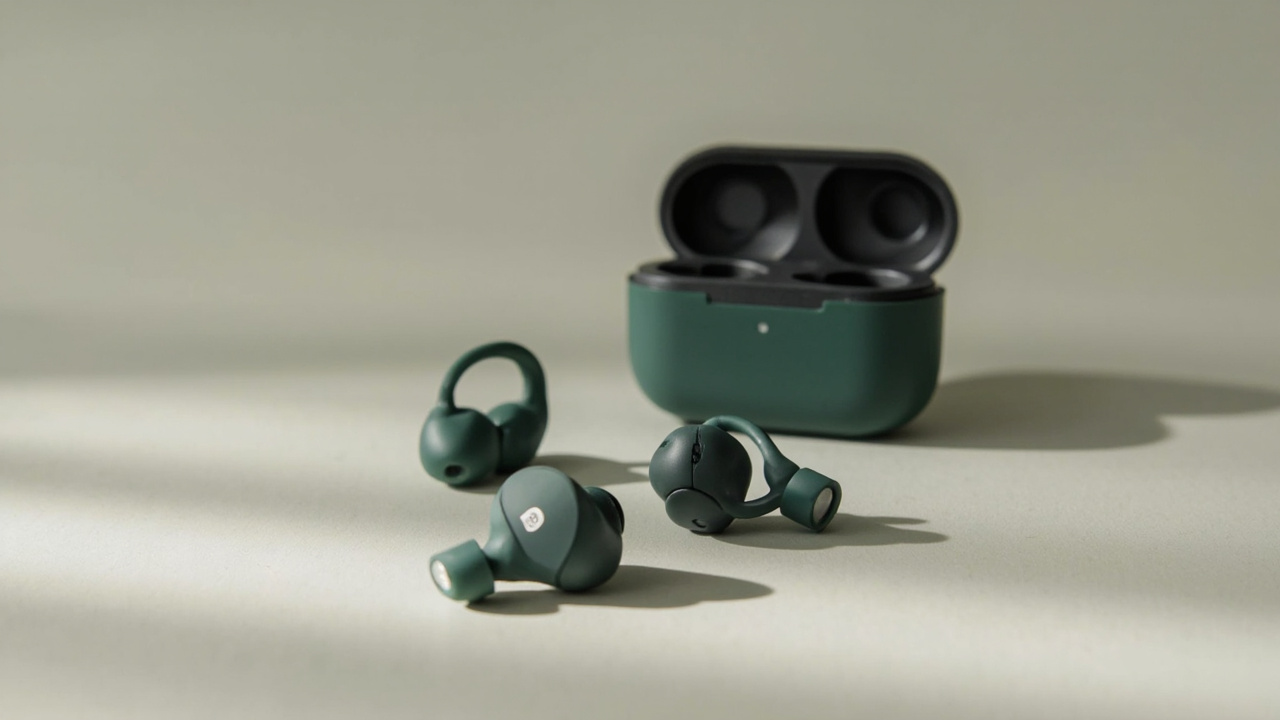
The Fairbuds 2 are available in two colors: Forest Green and Horizon Black, according to Fairphone. The company lists the product in both colors on its official Fairbuds 2 page.
Smaller earbuds and smaller case
Fairphone said the Fairbuds 2 use an all-new design that is 37% smaller for the earbuds and 32% smaller for the charging case compared with the previous Fairbuds. The company lists earbud dimensions of 30.2 x 22.6 x 24.38mm and case dimensions of 56.5 x 45.2 x 27.7mm.
The company lists weight at 5.8g per earbud and 64g with the case. It also describes stronger magnets inside the case for a more secure fit and capacitive touch controls on the earbuds.
The redesign moves the product to a stemmed form, according to the launch materials summarized in secondary coverage, and keeps USB-C charging. Fairphone lists a USB-C port supporting USB Type-C cables for USB 2.0, 3.0 and 3.2. The product page does not list Qi wireless charging.
Seven user-replaceable parts
The central design feature is modularity. According to Fairphone, the Fairbuds 2 have seven user-replaceable components, including the batteries in the earbuds and the battery in the charging case. The company said the design uses no glue and no forced obsolescence.
According to Fairphone, users can swap both the individual earbud batteries and the charging case battery themselves. The original Fairbuds used zero glue and no special tools for those battery swaps, and the company said the Fairbuds 2 were built directly on that foundation.
Fairphone said the Fairbuds 2 provide the industry’s only replaceable battery in both the earbuds and the charging case. Spare parts will be sold on Fairphone’s site, with a total of seven user-replaceable parts including eartips and sleeves. The company also lists an iFixit score of 10 out of 10.
The earbuds are backed by a warranty of up to three years, according to Fairphone. The company also said the Fairbuds 2 are certified by LONGTIME, an independent European label for durability and longevity, because of high repairability. The product page describes the Fairbuds 2 as the world’s first earbuds certified by that label for repairability.
Sound, noise canceling and tuning
At the core of the audio system is a new 11mm dynamic driver with an organic bio-cellulose diaphragm, according to Fairphone. The company said the driver is made from light organic fibers rather than traditional metals or plastics. Tuning was handled by Form Follows Frequency, a Rotterdam-based design and acoustic engineering studio.
According to Fairphone, the tuning is intended to deliver deeper bass, warmer mids and clear highs, with a brighter and crisper treble from the lighter driver. The listed frequency response is 20Hz to 20kHz, with driver impedance of 32 ohms and sensitivity of 99±2dB at 1kHz.
For the first time on Fairbuds, the new model supports LDAC for high-fidelity audio playback, according to Fairphone. The company said LDAC streaming reaches up to 990 kbps, which it describes as three times the sound quality compared with standard Bluetooth codecs. Listed codec support includes AAC, SBC, LC3 and LDAC.
The earbuds support hybrid active noise canceling with up to 45dB noise reduction, according to Fairphone. The system uses a six-microphone array, with a three-microphone array per side, to address wind, environmental and background noise. The specifications also list support for active noise canceling and ambient noise canceling.
According to The Verge, the original Fairbuds supported only SBC and AAC codecs, similar to Apple’s AirPods. The addition of LDAC therefore expands Bluetooth audio options on the second generation.
Battery life, Bluetooth and app controls
Fairphone lists up to 8 hours of playback with active noise canceling off for the earbuds alone, and up to 6 hours with active noise canceling on. Total playback time with the charging case is listed as up to 40 hours. The company describes that total as almost twice the battery life of the prior generation in hands-on launch coverage, while the specification itself states 40 hours without active noise cancellation.
Battery capacity is listed as 45 mAh for the earbuds and 500 mAh for the case. According to Fairphone, charging for 10 minutes provides 1.5 hours of playback time. The earbuds are listed with auto-off after 15 minutes.
Connectivity is Bluetooth 6.0 with dual multipoint connectivity, according to Fairphone. The earbuds can save up to six devices and switch between two active devices when needed. They also support Google Fast Pair and Find Hub.
Bluetooth range in line of sight is listed as up to 10 meters. Listed profiles include A2DP V1.3.2, AVRCP V1.6.2, GAVPD V1.3, HFP V1.7.2 and HSP V1.2. The system includes six microphones in total.
For personalization, Fairphone points to a companion Fairbuds app with a five-band adjustable equalizer and four expertly crafted presets. The company also lists customizable EQ with four presets as a headline feature.
Durability and skin-safe materials
Fairphone lists IP54 dust and splash resistance for the Fairbuds 2. The rating covers protection against rain and sweat during workouts and commuting, but not complete waterproofing. The company also highlights PFAS-free plastics and silicone for parts in direct contact with skin.
According to Fairphone, the PFAS-free plastics and silicone are SGS-tested. The product page describes the exterior as 100% PFAS-free and safe for skin. The company said it pioneered the use of PFAS-free plastics and silicone in this application.
The everyday-use features include touch controls, stronger case magnets and the three-year warranty option. According to Fairphone, the warranty provides extra coverage beyond standard terms, with registration conditions described on its product page.
Recycled content, fair sourcing and e-waste
Fairphone said the Fairbuds 2 are made with about 49% fair and recycled materials by total weight. The U.S. product listing states 46.8% fair and recycled materials by total weight. Listed inputs include plastics, rare earth elements, tin, cobalt, copper, gold and silver.
The detailed breakdown lists 100% recycled rare earth elements in speaker magnets, 100% recycled tin in solder paste, and 73% recycled plastics of total plastics. It also lists 100% fair gold via Fairmined credits and Responsible Gold credits, 100% fair cobalt in the battery via Fair Cobalt credits, 100% fair-mined copper via credits, and 100% fair silver via Fairmined credits.
According to Fairphone, production includes a Living Wage Bonus and Workers’ Voice programs, with assembly using 100% renewable energy. The company said the Fairbuds 2 are 100% e-waste neutral.
The company also publishes broader impact figures on the Fairbuds 2 page: 2,083 tons of CO2e avoided in 2025, $1.25M paid in living wage bonuses since 2019, 30 tons of e-waste collected in 2025, and a 30% lower product carbon footprint. Those figures describe company-wide impact reporting shown alongside the product, not only the earbuds themselves.
Why Fairphone ties the launch to repairability
Fairphone said most earbuds are designed without longevity or repairability in mind, sealed inside glued-shut shells. It said batteries can degrade in as little as 18 to 24 months, after which the entire product is often discarded. The company cited an expected global earbuds market of 1.2 billion units sold yearly by 2030.
The company also said less than 15% of small electronics like earbuds are ever reused or responsibly recycled, leaving roughly 40,000 tons of headphones thrown away each year. It positioned International E-Waste Day as a fitting date for a product intended to show small electronics do not have to be disposable.
Fairphone said it pioneered the repairable audio category in 2023. Raymond van Eck, CEO of Fairphone, said a worn-out battery should never require throwing away a product, adding that the company proved earbuds could be built to last rather than to sell and replace.
The company said the Fairbuds 2 bring the same longevity-first approach to a true wireless form factor. With replaceable batteries in both the earbuds and the case, the company said a worn part requires replacing only that part, not the whole product.
Sources referenced
- Fairbuds 2. Our most sustainable wireless earbuds yet. - Fairphone (https://www.fairphone.com/fairbuds-2)
- Fairphone launches the new Fairbuds 2: Setting a new standard for modular audio and longevity - Fairphone press release (https://www.fairphone.com/press/pdf/Fairbuds%202%20Press%20Release%20%282%29.pdf)